
Scaling a brand is not the same as growing a business. Growth often means doing more of what already works. Scaling means building systems that allow expansion without losing efficiency or quality. Many brands struggle here because they confuse short-term growth with long-term scalability. As a result, they expand too quickly or without structure, which leads to inconsistent performance. Scaling a brand requires a shift in thinking. It focuses on systems, processes, and repeatability instead of one-time efforts. The goal is not just to increase revenue but to expand in a way that remains stable, efficient, and sustainable over time.
Understanding scaling a brand in modern business
Scaling a brand means increasing revenue and reach without increasing costs at the same rate. It is about creating leverage through systems, technology, and processes. In simple terms, it means doing more with less. Many businesses misunderstand scaling and confuse it with expansion or growth. Growth is linear. Scaling is exponential. Expansion is about entering new markets or adding products. Scaling is about making the existing structure capable of handling that expansion efficiently. In modern business, scaling depends heavily on systems rather than individual effort. Brands that rely too much on manual work struggle to scale because they hit operational limits quickly.
Building a scalable brand foundation
Clarifying brand positioning and identity
A strong brand foundation starts with clear positioning. Without it, scaling becomes confusing and inconsistent. Brand positioning defines what the business stands for, who it serves, and why it exists. This clarity ensures that every marketing message, product decision, and customer interaction stays aligned. Consistency is critical because scaling amplifies everything, including weaknesses. If messaging is unclear at a small scale, it becomes chaotic at a larger scale.
Creating operational systems that support growth
Systems are the backbone of scaling a brand. Without them, businesses rely too heavily on individuals rather than processes. Operational systems define how tasks are completed, how teams collaborate, and how decisions are made. When these systems are documented and standardized, the business becomes easier to replicate and expand. This reduces dependency on key individuals and ensures consistency across operations.
Strengthening product or service consistency
Scaling only works when the core offering is stable. If quality fluctuates, expansion will damage the brand. Product or service consistency ensures that customers receive the same experience regardless of scale. This requires clear standards, quality control processes, and continuous monitoring. A scalable brand protects its reputation by maintaining consistency even as demand increases.
Market readiness and expansion strategy
Identifying demand signals in your niche
Before scaling, it is important to understand whether the market is ready. Demand signals include increasing customer inquiries, repeat purchases, and rising engagement. These signals indicate that the brand has traction. Scaling too early can lead to wasted resources and operational strain. Market readiness ensures that expansion is supported by real demand rather than assumptions.
Expanding into new customer segments
Once a brand is stable, the next step is often expanding into adjacent audiences. This means targeting new customer segments that are related but not identical to the core audience. The key is balance. Expanding too far can dilute brand identity, while staying too narrow can limit growth. Successful scaling involves gradual and strategic audience expansion.
Geographic and digital expansion opportunities
Scaling a brand can also involve entering new geographic markets or digital platforms. This includes expanding to new regions, languages, or online ecosystems. Each expansion requires adaptation, but the core brand identity should remain consistent. Choosing the right channels is critical because not every market behaves the same way.
Marketing systems for scaling a brand
Building repeatable acquisition channels
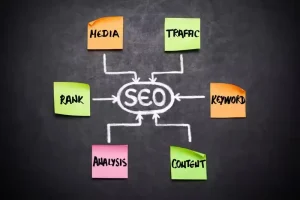
A scalable brand relies on predictable acquisition systems. These include SEO, paid advertising, referral programs, and partnerships. The goal is to create channels that consistently bring in customers without constant manual effort. SEO is particularly powerful because it compounds over time. Paid ads provide immediate scale, while referrals build trust-based growth.
Strengthening brand awareness strategies
Brand awareness is not built through one-time campaigns. It requires consistent storytelling across all platforms. A scalable brand maintains messaging consistency while adapting formats for different channels. Over time, this repetition builds recognition and trust. Strong awareness reduces customer acquisition costs and improves conversion rates.
Using content ecosystems for scalable visibility
Content is one of the most effective scaling tools. Blogs, videos, and social content work together to build visibility. Evergreen content continues to generate traffic long after publication. When content is structured into ecosystems, it creates compounding value. This makes content one of the most efficient long-term scaling strategies.
Financial and operational scaling considerations
Managing cost efficiency during growth
One of the biggest risks in scaling is rising costs. Without control, expenses can grow faster than revenue. Cost efficiency ensures that scaling remains profitable. This requires careful budgeting, resource allocation, and continuous optimization.
Building scalable revenue models
Not all revenue models scale equally. Subscription models, digital products, and recurring services are more scalable than one-time transactions. Scalable revenue models provide predictable income, which supports long-term expansion. Predictability is essential for planning and investment.
Hiring and team structuring for scale
As a brand grows, teams must expand strategically. Hiring too early increases costs, while hiring too late creates bottlenecks. A scalable structure defines clear roles and responsibilities. It also ensures that culture and quality remain consistent during expansion.
Technology and automation in scaling a brand
Automating repetitive business processes
Automation reduces manual workload and improves efficiency. Tasks like email marketing, customer onboarding, and reporting can be automated. This allows teams to focus on strategic work instead of repetitive tasks. Automation is a key driver of scalable operations.
Data-driven decision making
Scaling requires accurate data. Without it, decisions are based on assumptions. Data helps identify what is working and what needs improvement. Metrics such as conversion rates, customer acquisition cost, and retention rates are essential for scaling decisions.
Customer experience optimization tools
Customer experience plays a major role in scalability. CRM systems and personalization tools help manage relationships at scale. These tools ensure that customers receive consistent and relevant communication, even as the audience grows.
Common challenges in scaling a brand
Losing brand identity during expansion
As brands grow, they often struggle to maintain consistency. Messaging becomes diluted, and identity becomes unclear. This weakens customer trust. Maintaining strong brand guidelines helps prevent this issue.
Operational bottlenecks
Many brands hit operational limits during scaling. Processes that worked at a small scale may fail under higher demand. Identifying and fixing bottlenecks early is essential for smooth expansion.
Market competition and saturation
As brands grow, they often enter more competitive spaces. Standing out requires differentiation and strong positioning. Without it, scaling becomes difficult in saturated markets.
Measuring success when scaling a brand
Revenue and profitability indicators
Revenue growth is important, but profitability matters more. A scalable brand focuses on sustainable financial performance rather than short-term spikes.
Brand recognition and market positioning
Brand strength is measured by awareness and perception. A successful scaling strategy improves visibility and positioning in the market.
Customer retention and lifetime value
Retention is one of the strongest indicators of scalable success. Loyal customers reduce acquisition costs and increase long-term revenue.
Future trends in brand scaling
Technology is changing how brands scale. AI-driven automation, personalization, and predictive analytics are becoming central to growth strategies. Businesses are also shifting toward ecosystem-based models where multiple channels and products work together. Community-driven scaling is also becoming more important as customers seek engagement beyond transactions.
Conclusion
Scaling a brand is a strategic process that goes far beyond increasing sales. It requires systems, consistency, and long-term thinking. Businesses that focus on structure rather than speed are more likely to scale successfully. From operational systems to marketing channels, every part of the business must be designed for expansion. While challenges such as competition, complexity, and cost management exist, the long-term benefits are significant. A well-scaled brand becomes more stable, more efficient, and more valuable over time. Sustainable scaling is not about growing fast. It is about growing smart and building a system that can support continuous expansion.